Buying Luxury Electric Golf Carts is not simply a matter of choosing the brightest finish. It involves comfort, engineering, battery performance, safety, and long-term value. A cart may look impressive under showroom lights, yet feel ordinary on a steep driveway. That difference matters.
“Luxury should improve the driving experience, not merely decorate the vehicle,” says Mark D. Johnson, a longtime golf-cart industry consultant. His point is easy to overlook. Premium seats, custom wheels, and LED lighting attract attention. However, a reliable motor, stable suspension, and correctly matched battery create genuine quality. Buyers should inspect these features before admiring the leather stitching.
This guide explores seven practical tips for buying Luxury Electric Golf Carts with greater confidence. It considers range, charging time, construction quality, after-sales support, customization, and ownership costs. It also examines details that sellers may explain too quickly. Ask about battery replacement intervals. Test the brakes on an incline. Listen for unusual motor noise.
Some advice sounds obvious. It is still often ignored. A beautiful cart can become expensive when parts are difficult to source. Even experienced buyers can focus too heavily on appearance. That is a mistake worth admitting. Careful comparison creates a better chance of finding a quiet, comfortable, and dependable vehicle for daily resort travel, private communities, or recreational use.
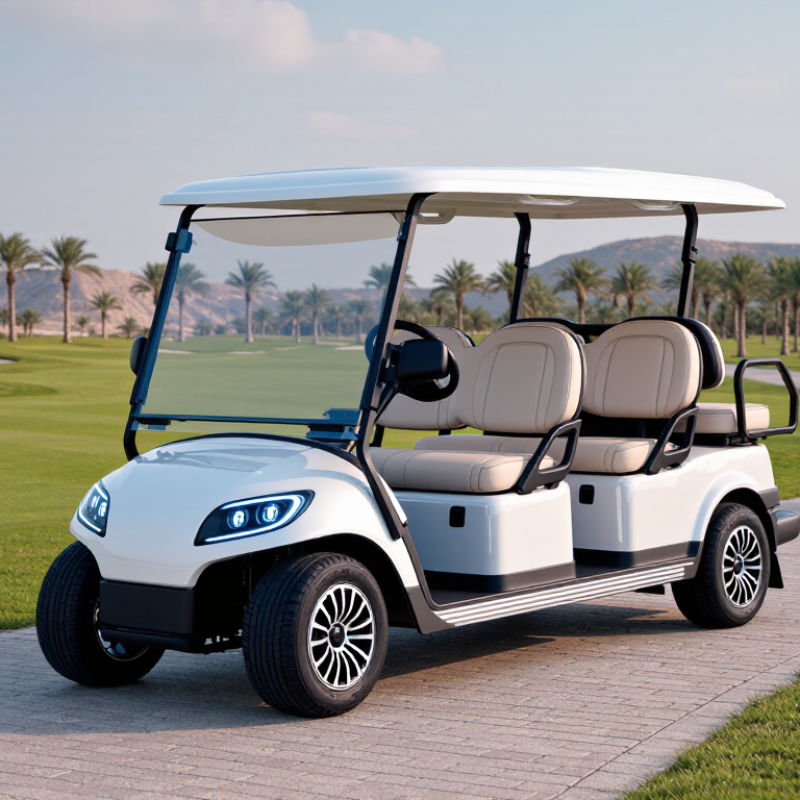
7 Tips for Buying Luxury Electric Golf Carts
Define the trip before comparing leather seats, lighting, or touchscreen controls. The National Golf Foundation’s 2024 Golf Industry Overview reported 28.1 million on-course golfers in the United States during 2023. That figure shows strong demand, but your routine matters more. Count every seat. A two-seat cart suits short errands and quiet residential paths. A four- or six-seat model works better for families, guests, or resort transport. Check the actual seating layout, legroom, storage, and maximum payload. A rear-facing bench may look elegant, yet it can feel cramped with adults and bags.
Study the driving environment carefully. Flat fairways need less torque than steep private roads, loose gravel, or wet grass. The U.S. Department of Energy’s Alternative Fuels Data Center notes that temperature, speed, terrain, and accessory use can affect electric-vehicle efficiency. Air conditioning and heated seats may reduce practical range. Range claims are not promises. Test the cart on your longest route, including hills, tight turns, and loading areas. Measure garage width and charging distance. I have seen buyers overlook both.
Ask for battery capacity, charging time, warranty terms, brake specifications, and service intervals. Verify whether the charger matches your electrical supply. Passenger weight changes performance, especially uphill. Leave margin. Luxury materials also need weather-resistant construction, sealed controls, durable flooring, and secure storage. A polished finish cannot compensate for poor visibility or weak suspension. Some buyers focus too heavily on appearance; that mistake is easy to repeat.
7 Tips for Buying Luxury Electric Golf Carts
Compare battery types before admiring leather seats or polished trim. Lead-acid batteries cost less, but they are heavier and require regular water checks. Lithium batteries usually offer faster charging, longer usable life, and steadier performance. Ask about battery capacity, warranty terms, and replacement costs. Tip two: check real-world range, not only the advertised figure. Hills, passengers, cold weather, and soft tires can reduce distance noticeably.
Tip three: inspect the charging system. A smart charger should match the battery chemistry and voltage. Confirm charging time from empty, and ask whether the charger works safely in your garage. Tip four: test the motor on a slope. Smooth acceleration matters more than a dramatic starting surge. Compare motor power, controller response, and braking feel. Tip five: listen for unusual noise or vibration during the test drive. Small warning signs can become expensive repairs.
Tip six: examine battery access, cables, terminals, and ventilation. Clean connections support dependable current flow. Tip seven: request written specifications from the seller. Range figures can be optimistic. I once trusted a range estimate and underestimated a long, hilly route. That mistake was avoidable. Drive with the intended passenger load, test reverse and hill starts, and measure charging performance when possible. A comfortable cart is useful, but dependable energy delivery matters more.
| Buying Tip | What to Compare | Lead-Acid Battery | AGM Battery | Lithium-Ion Battery | Luxury-Buyer Takeaway |
|---|---|---|---|---|---|
| 1. Choose the right battery chemistry | Weight, usable capacity, maintenance, service life, and replacement cost. | Low initial cost; heavy; requires regular watering and terminal care. | Sealed and maintenance-free; heavier than lithium; moderate cycle life. | Lightweight; high usable capacity; no watering; battery-management system required. | Lithium usually provides the quietest, lightest, and most refined driving experience. |
| 2. Match range to your normal use | Advertised range versus real-world distance with passengers, hills, speed, and temperature. | Approximately 25–45 miles per charge in typical recreational use. | Approximately 25–45 miles per charge, depending on capacity and conditions. | Approximately 40–80 miles per charge; larger packs may provide more. | Ask for tested range at the intended passenger load, terrain, and speed. |
| 3. Evaluate charging time and convenience | Charger output, charging profile, outlet requirements, and overnight charging time. | Often about 6–10 hours for a full charge; charging time rises as batteries age. | Usually about 6–10 hours; charging should be performed in a ventilated area. | Often about 4–8 hours; faster charging is possible with a compatible charger. | Confirm that the included charger is matched to the battery chemistry and pack size. |
| 4. Compare motor power and torque | Motor type, rated power, torque delivery, controller capacity, and hill performance. | Common systems range from approximately 3–6 kW for recreational carts. | Similar power range; performance depends strongly on battery voltage and controller. | Often paired with approximately 5–15 kW systems for stronger acceleration and climbing. | Prioritize smooth torque, thermal protection, and consistent hill performance over peak numbers. |
| 5. Check voltage and usable energy | System voltage, amp-hours, watt-hours, and the percentage of capacity that can be used regularly. | Common configurations include 36 V or 48 V; deep discharges can shorten battery life. | Commonly 36 V or 48 V; usable capacity varies by battery design and condition. | Commonly 48 V or higher; a larger usable-energy reserve supports longer range. | Compare watt-hours, not amp-hours alone, because voltage affects total energy. |
| 6. Consider service life and maintenance | Expected cycles, warranty terms, replacement availability, and inspection requirements. | Often around 500–1,000 cycles with proper care; water levels and corrosion require attention. | Often around 500–1,000 cycles; sealed construction reduces routine maintenance. | Often around 2,000–4,000 cycles, depending on chemistry, temperature, and depth of discharge. | Review the full battery warranty, including capacity retention and labor coverage. |
| 7. Inspect comfort, safety, and total ownership cost | Suspension, braking, seating, lighting, weather protection, payload, charging equipment, and future battery cost. | Lower purchase price but greater weight and potentially higher maintenance over time. | A cleaner installation than flooded batteries, with moderate weight and operating cost. | Higher initial price but lower maintenance, reduced weight, and potentially longer service life. | A premium cart should combine refined ride quality with dependable braking and transparent ownership costs. |
Note: Range, charging time, cycle life, motor output, and battery performance are typical industry estimates and vary with battery capacity, vehicle load, terrain, temperature, tire pressure, driving speed, and charging practices. Always verify specifications with the seller before purchase.
Tip 1: Sit in the cart for at least ten minutes. Check whether the seat supports your lower back and keeps your knees relaxed. Comfort should remain steady, not impressive for only two minutes.
Tip 2: Test the steering wheel, pedals, and entry step. Leather-looking materials cannot fix an awkward driving position.
Tip 3: Inspect suspension behavior on uneven ground. A quiet ride may still feel harsh over gravel.
Tip 4: Examine safety equipment carefully. Look for reliable brakes, clear lighting, mirrors, seat belts, and a stable parking brake. Ask how the cart performs on slopes and during sudden stops. Review the owner’s manual and maintenance records.
Tip 5: Check the battery compartment for secure connections, clean terminals, and practical access. Poor upkeep can reduce confidence and operating range. Do not rely only on the seller’s estimate. Confirm specifications independently.
Tip 6: Plan the interior around real use. Choose weather-resistant upholstery, useful storage, easy-clean flooring, and controls you can reach without looking down. A built-in charging port sounds convenient, but its placement matters.
Tip 7: Question every customization choice. Extra lighting, audio equipment, or decorative trim can add weight and maintenance needs. Luxury is not always better. A quieter cabin, firm seating, and sensible storage may serve you longer.
Before purchasing, compare the finished cart with your daily routes, passenger needs, and available service support. I would leave room for reconsideration; a beautiful interior can distract from weak brakes or poor ergonomics.
Luxury Electric Golf Carts: Inspect Build Quality, Warranty Coverage, and Dealer Support
A quiet motor and stitched seats can hide weak engineering. Inspect the cart in daylight. Check welds, panel gaps, suspension joints, brake response, and underbody protection. Lift the seat and photograph the battery label, cable connections, charger, and corrosion. The U.S. Department of Energy’s Alternative Fuels Data Center reports that electric vehicle batteries commonly last 8–15 years, depending on use and conditions. Golf carts face different loads, but heat, poor charging habits, and neglected connections still matter.
Read the warranty before discussing discounts. Confirm separate coverage periods for the frame, motor, controller, charger, and battery. Ask whether labor, towing, water damage, and capacity loss are included. A five-year battery warranty may sound strong, yet a strict capacity threshold can limit real protection. I would request every exclusion in writing. Sales promises are not warranty terms. Keep the invoice and delivery inspection report.
Dealer support becomes practical after the purchase. The National Golf Foundation reported 28.1 million U.S. on-course golfers in 2023, indicating sustained demand for golf-related equipment and service. Ask how quickly the dealer can supply common parts, diagnose error codes, and provide mobile repairs. Test their response before buying. Send three specific questions. Vague replies are useful evidence. A polished showroom is reassuring, but parts access and technician training deserve equal attention. Even careful buyers can overlook charging instructions. That mistake can become expensive.
Use this checklist to compare build quality, warranty coverage, dealer support, and ownership considerations before buying. The values show the number of practical verification points in each buying area, not brand or market-share data.
How to use the chart: Give extra attention to categories with more verification points. Ask for written specifications, warranty terms, service details, and total ownership costs before making a purchase.
A luxury electric golf cart can look affordable beside a premium vehicle, but the purchase price tells only part of the story. Before choosing a model, calculate its total ownership cost over five years. Use a simple spreadsheet, not memory. Include the purchase price, delivery fees, taxes, financing charges, and required safety equipment. Local registration and insurance rules may also affect the final figure.
Electricity is usually inexpensive, yet charging losses still matter. Check the cart’s real energy use at the wall outlet, not only its advertised range. Battery replacement can become the largest expense. Ask for written warranty terms, expected service life, and replacement labor costs. Do not assume warranty coverage includes every battery component. Add routine items, such as tires, brake adjustments, suspension work, lights, and charger repairs. Luxury finishes feel impressive, but custom seats and electronic features may increase repair bills.
Storage creates another hidden cost. A covered, dry space protects batteries, upholstery, and wiring from heat and moisture. If the cart will use public roads, verify local equipment, registration, and insurance requirements before purchasing. Early estimates often miss small expenses, including winter storage and replacement cables. I would keep a ten percent contingency fund for unexpected repairs. Compare the five-year total and yearly cost, rather than focusing only on the monthly payment. A less expensive cart can cost more when battery access, service support, or parts availability is poor.
Sit for at least ten minutes. Check lower-back support, relaxed knees, and steady comfort. Two impressive minutes prove little.
Turn the steering wheel, press the pedals, and use the entry step. Controls should feel natural without awkward reaching.
Drive across gravel or uneven pavement. Listen for rattles and notice harsh impacts. A quiet ride may still feel uncomfortable.
Check the brakes, lights, mirrors, seat belts, and parking brake. Ask about slopes and sudden stops. Read the manual.
Photograph the battery label, charger, terminals, and cable connections. Look for corrosion or loose fittings. Do not trust range estimates alone.
Match the interior to daily use. Consider weather-resistant seats, easy-clean flooring, reachable controls, and practical storage. Decorative features add weight.
Request separate coverage details for the frame, motor, controller, charger, and battery. Ask about labor, towing, water damage, and capacity loss.
Send three specific service questions before buying. Ask about parts, error-code diagnosis, and mobile repairs. Vague answers are useful evidence.
Add the purchase price, delivery, taxes, financing, electricity, maintenance, insurance, storage, and battery replacement. Keep a ten percent repair reserve.
Compare the finished cart with your routes, passengers, storage, and service access. A beautiful interior can distract from weak brakes. Reconsider calmly.
Choosing the right Luxury Electric Golf Carts begins with understanding how and where you plan to use it. Consider your typical driving environment, expected travel distance, terrain, and passenger capacity before comparing models. Battery type, driving range, charging time, and motor performance all affect daily convenience and reliability. A suitable cart should provide enough power for your routes while offering a practical charging solution.
Comfort and safety are equally important, so evaluate seating, suspension, lighting, braking systems, weather protection, and available interior customization. Carefully inspect the cart’s construction, materials, and overall finish, then review warranty coverage and the quality of local dealer support. Finally, calculate total ownership costs, including the purchase price, charging, maintenance, battery replacement, insurance, and accessories. By considering performance, comfort, durability, support, and long-term expenses together, you can select a luxury electric cart that matches your lifestyle and provides dependable value over time.